Prevent Millions in Fines with Big Rig Emergency Cleanup
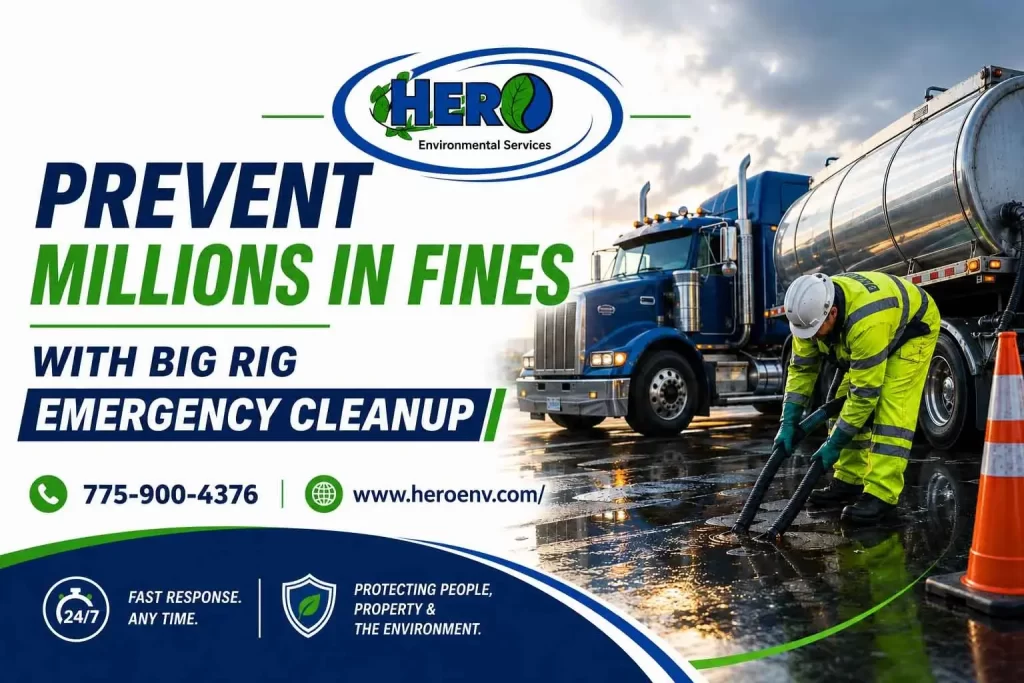
Imagine a big rig rolls over on the highway. The driver is safe, but diesel is running across the pavement, a damaged tank is leaking, and spilled cargo is creeping toward a storm drain just a few yards away. At that point, the crash is no longer just a traffic incident.
Big rig accidents involving diesel, oil, chemicals, or hazardous cargo can quickly turn into a hazard and an environmental emergency. The longer a spill sits, the farther contamination spreads, endangering nearby waterways, requiring costly soil excavation, and triggering strict regulatory reporting requirements.
Federal regulations mandate reporting for specific hazardous material releases, while EPA rules place financial responsibility directly on parties involved in the transportation or the spill.
The good news? Rapid emergency spill response can prevent a manageable roadside accident from becoming a massive environmental liability.
Why Can a Big Rig Accident Become So Expensive?
The truck damage you can see is only one part of the cost.
Imagine 80 gallons of diesel leaving a ruptured saddle tank. Cleaning fuel from pavement is already a major problem. If that fuel flows into roadside soil, a storm drain, a creek, or another sensitive area, the cleanup becomes more complex and can bring additional regulatory exposure, quickly changing the job.
A response may now involve:
- Spill containment
- Fuel or chemical recovery
- Contaminated soil removal
- Hazardous Spill Cleanup
- Waste transportation and disposal
- Environmental testing
- Regulatory reporting and documentation
- Roadway or property restoration
When Cleanup Becomes a Regulatory Issue
The EPA states that responsible parties may be liable for costs associated with containing and cleaning up releases of oil and hazardous substances.
Environmental violations can also carry significant penalties. Current penalty amounts depend on the law violated, the facts of the incident, and inflation-adjusted federal limits. EPA regularly updates its civil monetary penalty amounts, and certain Clean Water Act violations can carry penalties calculated on a per-day, per-violation basis.
Does that mean every diesel spill creates millions of dollars in fines? No. But a large incident involving delayed reporting, prolonged contamination, multiple violations, cleanup costs, damaged natural resources, and extended road closures can create very serious financial exposure. That is why the first few actions after the crash are critical to an effective environmental cleanup response.
The way a spill is handled in those early stages can directly affect how far the contamination spreads, how complex the cleanup becomes, and what costs may follow. Here’s what that can look like:
| What Happens After the Crash | What It Can Mean for the Cleanup |
| Spill is contained quickly | Limits the spread and may reduce the area requiring cleanup |
| Fuel reaches bare soil | Soil removal or remediation may be needed |
| Spill enters a drain or waterway | Cleanup may require a more extensive environmental response |
| Hazardous cargo is released | Specialized cleanup procedure and reporting may apply |
| Cleanup is poorly documented | Harder to verify what was contained, removed, or completed |
| Response is delayed | Contamination may spread farther, potentially increasing the scope and cost of cleanup |
What Should Happen Immediately After a Truck Spill?
The first priority is always people’s safety.
Drivers and bystanders should stay away from leaking material, fire hazards, fumes, unstable cargo, and moving traffic. A person who does not know what has spilled should never try to identify or clean it by touching it.
PHMSA advises people witnessing an oil spill or hazardous-material discharge to move to a safe location and contact emergency authorities. Certain hazardous-material transportation incidents have additional federal notification and reporting requirements.
Once emergency responders have secured the scene, the environmental response can begin.
A trained cleanup team may:
- Identify the spilled material.
- Stop or reduce the active leak when it is safe to do so.
- Keep liquids away from storm drains and waterways.
- Use absorbent materials, barriers, booms, or recovery equipment.
- Recover free liquids.
- Remove contaminated debris or soil.
- Package and transport waste properly.
- Document what was recovered and where it went.
Think of spill response as building a wall around the problem before the problem gets bigger.
| Get Emergency Environmental Help Before It Spreads - Call 775-900-4376 |
Why Is Fast Emergency Spill Response So Important?
Fuel does not politely stay beside the damaged truck.
It can run downhill, soak into gravel, move through soil, enter a culvert, or follow stormwater infrastructure. Wind and traffic can spread lighter debris and contaminated material farther from the original crash site.
If a spill reaches soil, water, or other sensitive areas, Nevada's environmental agencies may step in to oversee the cleanup. The state also has a 24-hour hotline for reporting hazardous-substance spills and other environmental incidents. A fast response gives crews a better opportunity to control the spill before those additional pathways become involved.
Consider two similar accidents:
| Slow Response | Rapid Response |
| Fuel spreads beyond the crash area | Spill is contained near its source |
| More soil may become contaminated | Smaller area may require cleanup |
| Storm drains may become involved | Drains can be protected early |
| Road may stay affected longer | Roadways can reopen faster |
| More material may require disposal | Waste volume may be reduced |
| Documentation starts late | Response is documented from the beginning |
Speed alone is not enough, however. The cleanup also has to be done correctly.
What Does Professional Environmental Cleanup Include?
Environmental Cleanup after a big rig crash is different from towing away the damaged tractor and sweeping debris off the road. The visible mess may disappear while contamination remains underneath.
For example, diesel that has soaked into roadside soil cannot simply be covered with clean dirt. Contaminated material may need to be excavated, properly managed, transported, and disposed of in accordance with the conditions of the incident.
Professional crews also look beyond the most obvious spill.
- Did the product enter a drain?
- Did diesel reach the dirt shoulder?
- Is liquid trapped underneath the overturned trailer?
- Did damaged cargo mix with firefighting water?
- Does surrounding soil need testing?
These questions can help determine whether a cleanup is truly finished.
| Hero Environmental Services has handled this type of real-world response in Northern Nevada. During a documented Reno dump-truck accident, first responders arrived within about 30 minutes; the team recovered 60 gallons of spilled diesel, removed 2.5 yards of petroleum-contaminated soil and debris, and remained on scene for about 11.5 hours. |
When Does a Truck Spill Need Hazardous Spill Cleanup?
Not every substance coming from a damaged truck is handled the same way. Diesel, gasoline, oils, solvents, industrial chemicals, batteries, contaminated cargo, and other materials can create very different risks.
Federal hazardous materials transportation regulations govern the movement of regulated hazardous materials, including requirements for communication, emergency response information, training, packaging, and incident reporting. PHMSA specifically requires accurate emergency-response information to be available for hazardous-material shipments.
That means the cleanup team needs to understand what it is dealing with before choosing a cleanup method.
A bag of ordinary dry cargo scattered across the shoulder is one situation. A leaking tote containing an unknown chemical is a completely different situation.
When the substance is unknown, leaking, reacting, emitting fumes, or marked as hazardous, the safest decision is to keep people away and let trained emergency personnel determine the next steps.
| Request Professional Hazardous Spill Cleanup - Call 775-900-4376 |
Can Good Cleanup Records Help After the Emergency?
Yes. Documentation is one of the most overlooked parts of emergency response. Once the road reopens, trucking companies, insurers, agencies, property owners, and other parties may need to know what happened.
Useful cleanup records may include:
- The exact location of the spill
- The type of fuel, chemical, or other material involved
- About how much material was recovered
- Which areas were affected by the spill
- The amount of contaminated soil or debris that was removed
- The cleanup methods used at the site
- The waste collected during the cleanup
- Where the waste was disposed of
- Whether any testing or monitoring was needed
- The condition of the site after cleanup was finished
A professional environmental cleanup company always keeps its environmental field reports prepared to meet applicable local, state, and federal requirements.
Common Questions About Big Rig Emergency Cleanup
Takeaway
Not every truck accident leads to a major environmental cleanup, but a fuel or chemical spill can change the situation fast. That's why waiting to see what happens could be risky.
Getting experienced spill responders on-site early helps contain the release, remove contaminated materials, and document the cleanup properly. Those first few hours can make a big difference in how far the contamination spreads and how complicated the cleanup becomes.
Facing a Big Rig Spill in Northern Nevada? Call Hero Environmental Services
When a truck crash releases diesel, oil, chemicals, or contaminated cargo, Hero Environmental Services is ready to respond.
We're a locally owned environmental services company based in Reno, serving Northern Nevada with 24/7 emergency spill response, hazardous spill cleanup, environmental cleanup, hazardous waste management, soil remediation, field services, and vehicle accident response.
Our certified and trained environmental professionals handle both hazardous and non-hazardous materials while meeting applicable local, state, and federal requirements.
As a BBB-accredited company with an A+ rating, Hero Environmental Services brings proven roadside experience to every call. We have performed emergency diesel recovery and contaminated-soil removal following Reno-area truck accidents, and our history includes extensive cleanup work connected with the Nevada Department of Transportation
If big rig accidents create an environmental emergency in Reno, Sparks, or elsewhere in Northern Nevada, getting qualified responders to the scene quickly can make a major difference.
Call 775-900-4376 for 24/7 environmental emergency response.