Soil Remediation vs. Soil Replacement: What’s the Difference?
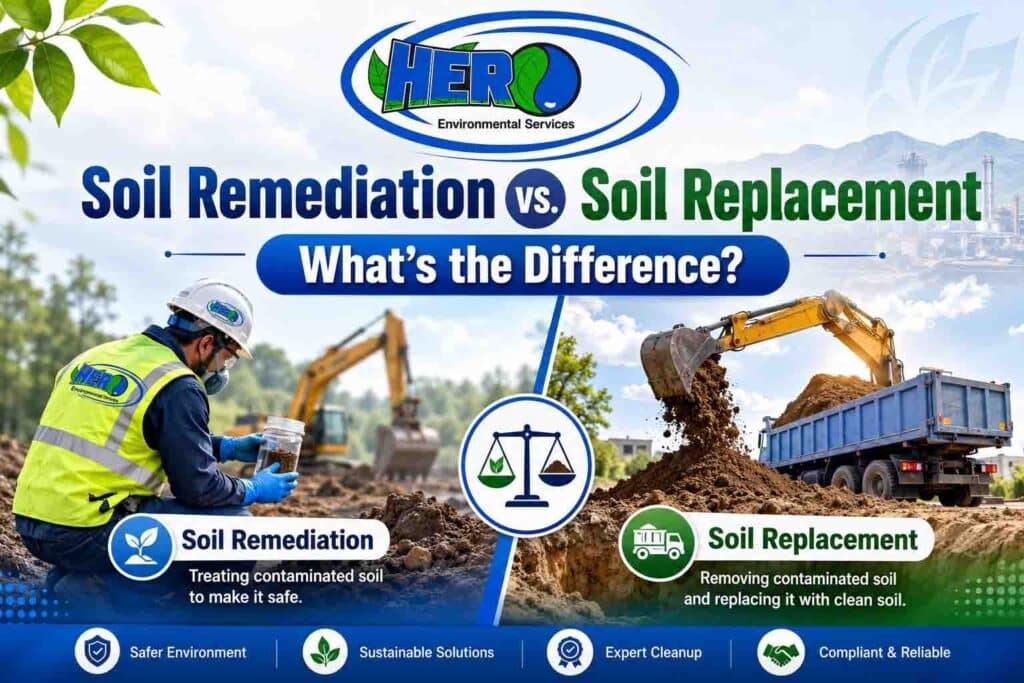
If your soil testing shows contamination, the next question is whether you should clean the existing soil or remove it entirely.
For most local business owners and property developers in the Reno-Sparks area, this isn't a question you face every day. The worst part is that not everybody is an expert, and the terminologies involved can easily confuse you.
However, here is the good news: the difference between soil remediation services in Reno and soil replacement comprises just a few main factors, and once you understand them, the right choice is easy. Here, we’ll break it down to help you make an informed decision for your property and your budget.
| Schedule Professional Soil Remediation in Reno - Call (775)-900-4376 |
What is Soil Remediation?
The process of cleaning up contaminated soil instead of removing it altogether is known as soil remediation. In this process, the contaminated soil remains on your property, but the pollutants are neutralized, removed, or broken down using various treatment methods.
Remediation is conducted in situ, i.e, treating the soil right where it sits, or ex situ, i.e, excavating the soil and treating it in another location before putting it back. In situ methods are generally more budget-friendly because they do not include the expense of excavation, transport, and disposal.
Common Remediation Techniques
- Bioremediation: Use of naturally occurring microorganisms to break down organic contaminants such as petroleum hydrocarbons. It is budget-friendly, eco-friendly, and works for most common pollutants.
- Thermal desorption: Heating the soil to vaporize contaminants, which are later captured and treated.
- Chemical treatment: Adding substances that stabilize contaminants, thus preventing them from spreading or becoming toxic.
- Phytoremediation: Use of plants to absorb, break down, and stabilize pollutants gradually.
- Soil washing: Use of water or chemical solutions to flush contaminants out of the soil.
When Does Remediation Work Best?
Remediation works best when contamination is localized, moderate, or organic in nature. It is also the right choice if you want to preserve the existing soil structure and avoid the logistical challenges of large scale excavation.
Benefits of Soil Remediation
It generally costs less, causes less disruption, and has better environmental outcomes. In situ remediation has much less impact on human health and ecosystems than excavation based methods.
Limitations of Soil Remediation
It can take months or even years, according to the method and the type of contamination. There are certain contaminants, such as heavy metals, that are difficult to treat effectively with remediation alone.
What Is Soil Replacement?
Soil replacement is the process of digging up the contaminated soil and hauling it away. The clean soil is brought in to fill the void. The process is the environmental equivalent of a complete do-over.
The Soil Replacement Process
- Removal of all contaminated soil from the affected area.
- Transportation of the contaminated material to a licensed landfill or treatment facility.
- Bringing in clean, certified soil to replace all that was removed.
- Making sure the new soil meets all engineering and environmental specifications.
When Does Replacement Work Best?
Replacement is a better option when the contamination is extreme, widespread, or involves pollutants that are difficult or impossible to treat with standard remediation methods. It is also a good choice for shallow contamination, where you can remove the problem efficiently.
Benefits of Soil Replacement
It is fast and thorough. Once the contaminated soil is gone, the problem is solved. It also improves the load-bearing capacity and stability of the soil, which is a bonus for construction projects.
Limitations of Soil Replacement
It is more expensive than remediation. You are paying for excavation, trucking, disposal fees, and new soil. It is also disruptive to your site and carries a larger environmental footprint.
And here's something most people don't realize: soil replacement is only practical for smaller areas. If you are dealing with contamination across an acre or more, the cost and logistics of replacement can increase even more.
Soil Remediation Vs. Soil Replacement - The Main Differences at a Glance
| Factor | Soil Remediation | Soil Replacement |
| Approach | Treats contamination in place | Removes and replaces the contaminated soil completely. |
| Cost | Generally lower | Generally higher |
| Timeframe | Weeks to months | Days to weeks |
| Disruption | Minimal to moderate | Significant disruption |
| Environmental Impact | Lower carbon footprint and less waste. | Higher impact due to transport, landfilling, and sourcing new soil. |
| Best For... | Moderate, organic, or localized contamination. | Severe, widespread, or difficult-to-treat contamination. |
| Soil Preservation | Keeps existing soil structure and microbial life intact. | Destroys existing soil structure. |
| Hire Licensed Professionals for Soil Remediation in Reno - Call (775)-9004-376 |
How to Decide Whether You Need Soil Remediation or Replacement?
The right choice depends on several factors that a qualified environmental professional can help you evaluate.
What Is Contaminating the Soil?
Some contaminants respond well to treatment. Petroleum hydrocarbons, for example, can often be bioremediated effectively. Heavy metals like lead or arsenic, on the other hand, are much harder to treat and may require removal.
How Much Soil Is Affected?
- Soil replacement may be practical if the contamination is confined to a small, shallow area that can be excavated safely.
- If it’s deep, widespread, or covering multiple acres, soil remediation is usually the only practical option.
What Are Your Plans for the Property?
If you're building a school or daycare, you might have stricter cleanup standards than for an industrial warehouse. The intended use affects both the cleanup goals and the method you choose.
How Quickly Do You Need the Site Ready?
If you need the site cleared and ready for development next month, replacement might be your only option. If you have time to let treatment work, remediation could save you a lot of money.
What Does Your Budget Allow?
If keeping costs down is a priority, remediation is often worth considering. Since the soil is treated instead of hauled away, you can avoid many of the expenses that come with excavation, transportation, disposal, and replacement.
What Do Local Regulations Require?
Every contaminated site must meet local environmental cleanup standards. For example, in Reno, projects are overseen by the Nevada Division of Environmental Protection (NDEP), and environmental professionals also consider EPA guidance when selecting the most appropriate cleanup method.
Common Questions Clients Ask
Final Thoughts
Finding out your property has contaminated soil is tough news. It is completely normal to feel stressed about what to do next. Soil remediation and soil replacement both solve contaminated soil problems, but they are designed for different situations.
The best choice depends on your budget, your schedule, and what is actually in the dirt. Sometimes it makes sense to take your time, and other times you need a fast start.
The most important step right now is to take a breath and avoid rushing. Fixing the land protects your investment, but it also keeps our neighborhood safe. It’s best to consult with a professional team for safe environmental practices.
Ready to Fix Your Soil? Get Expert Soil Remediation With Hero Environmental Services
Deciding between soil replacement and soil remediation in Reno is not an easy task, especially when you are not an expert. But you do not have to figure it out alone.
Hero Environmental Services has been helping property owners and businesses in Reno and the surrounding areas understand soil contamination challenges for years. We are a locally owned and operated team, led by Gary. We fully understand the process of environmental soil cleanup solutions specific to the region. We are also committed to providing transparent answers and not technical jargon.
Whether you need soil testing to understand what you are dealing with, a remediation plan that saves you money, or full-scale soil replacement managed properly from start to finish, our experts will help you. Call us today at (775) 900-4376 to schedule a consultation.